How it works
Every number
starts at 1.
Do the thing once and write it down. That's a 1. A set shows you which 1s build what you want, and a sheet of paper shows you them piling up. No app, no streak to break.
The example below is Get Fit's: he's made up, and he's who we built that set for.

Your 1s
What you want is a few numbers.
Pick what you want. A set breaks it into the few things you can count that build it. Get Fit counts four: strength reps, moving minutes, stretch minutes and times up from the desk.
Each number is its own pile, in its own measure. They never add together.

The cards
Each card is one way to do a 1.
A squat is one way to add strength reps. A brisk walk is one way to add moving minutes. Every card has three levels inside it, easy to hard, and the easy one works on a bad day.

Sheet 1, free
Print four weeks. Write the day's total.
Pick up to four cards, how many a day, how many in one go and how hard. One A4 sheet holds four weeks.
Write what you did in the day's box: 10 here, 20 there, the day's total when you're done. A blank day takes nothing off what you've already written.

Triggers
Hang a 1 on a moment you already have.
Forcing it works for a while. Then a trigger does the remembering: the kettle goes on, a call starts, the laptop shuts. Each trigger card shows which 1s fit in the time it gives you.

Level up
Same row. A harder level when it's gone ordinary.
When level 1 feels like nothing, circle level 2 on the next sheet. You never swap cards to get stronger. A bad week? Level 1 still counts.
Challenges
Bored? Good.
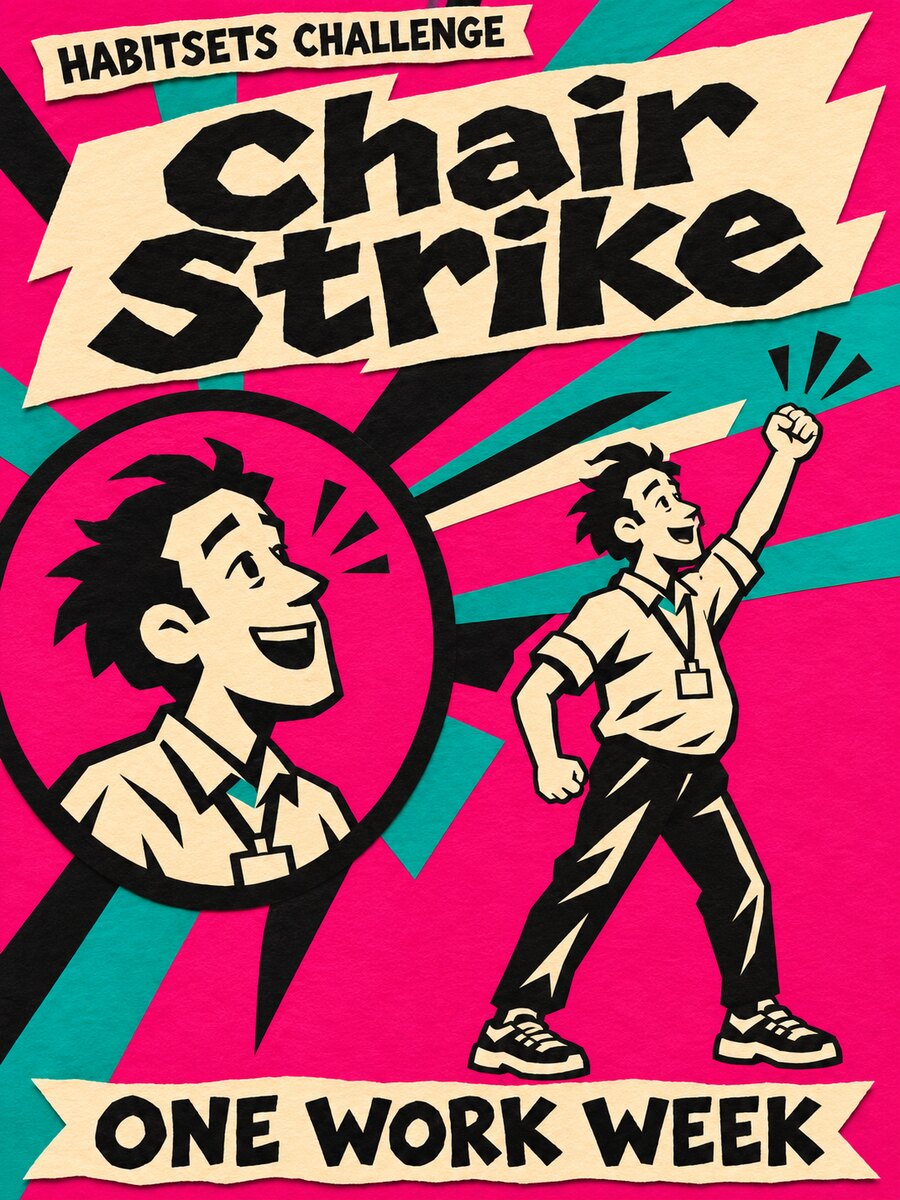
A Challenge is a short push with a name, an end and a way out, built from the 1s you already do. When it ends, you go back to your ordinary rows.
Back it up
Small habits that back the goal.
Some sets have a shelf of small extras, like protein at breakfast for Get Fit. Each keeps its own count, one at a time, from your second sheet on. They're never added to the main numbers.
Free, and what comes next
Sheet 1 is free. The System isn't on sale yet.
Every set's cards and its first sheet are free to print. No account, no email. The System will bring your next sheet each month with your numbers carried over, plus the levels, Challenges and extras. It's still being built, and nothing here takes payment.
Questions
Do I have to do every card?
No. Start with one row. You can put up to four on Sheet 1, but one you keep doing beats four you don't. Add more when the first one runs itself.
What if I miss a day?
Leave the box blank. Nothing comes off what you've already written, and the next box is still there tomorrow.
Why don't the numbers add up into one score?
Because a rep and a minute aren't the same thing. Each number is its own pile, so you can see each one grow without pretending they're one thing.
Is a bigger pile a promise of results?
No. The pile is the work you did, counted honestly. What it does for you is yours to notice; we don't promise an outcome.
When do I move up a level?
When the level you're on feels ordinary. Circle the next one on your next sheet. On a rough week, drop back: level 1 still counts.