Independent study · 20 cards
Habits studied from Napoleon Bonaparte.
Military commander and French administrator whose statecraft relied on extreme compartmentalization, crisp information filtering, and concrete logistics. These 20 cards adapt his desk mechanics for calm modern execution.
- Foundation 8
- Growth 6
- Mastery 4
- Challenge 2
What was studied
How we read the record.
The Correspondance générale (exceeding 40,000 dictated documents archived via Fondation Napoléon) and memoirs by private secretaries Méneval and Bourrienne record how Napoleon managed vast parallel dossiers without muddling priorities.
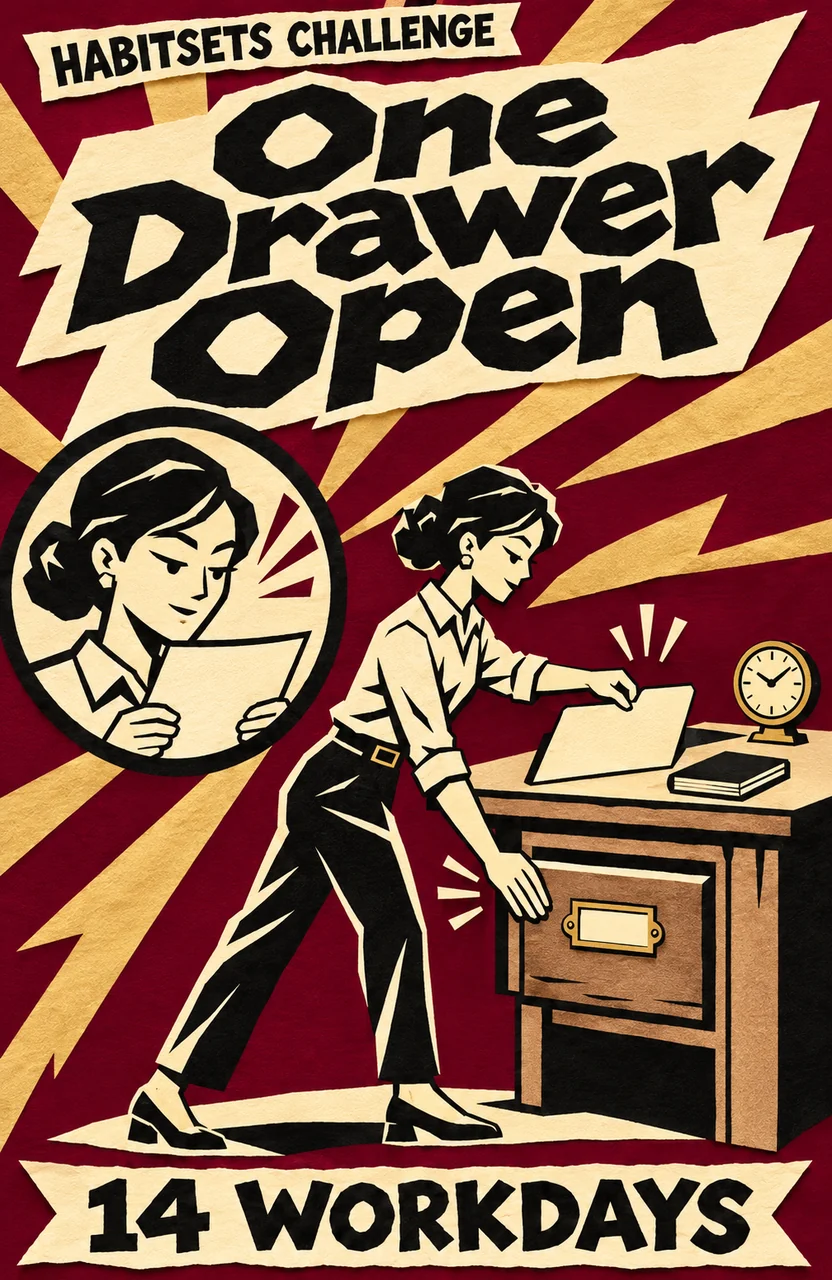
Described his attention as locked drawers: close one dossier completely before pulling open the next so subjects never bleed together.
Private secretariat pre-filtered correspondence, condensed thick reports into sharp summaries, and let trivial requests age until obsolete.
Never trusted broad reassurance — tracked exact numbers, supply distances, timing windows, and verifiable readiness across dispatches.
Nuances preserved
- Close Drawer A completely before opening Drawer B
- Let non-urgent correspondence age before reacting
- Demand one-page structured summaries before deep dives
- Separate high-speed rough dictation from clean editing
- Pack an identical mobile desk kit to preserve context switching
- Healthy 20-min power rest replaces broken night sleep myths
Secretaries note Napoleon kept irregular nocturnal dispatches and left lamps lit deliberately for political theater. Modern readers should never copy chronic 4-hour fragmented sleep; these cards translate his fast reset into crisp daytime breaks and healthy night boundaries.
The cards
Their methods, for today.
20 cards · tap a card to flip it
Foundation 8
The load-bearing practices you return to. Build the base and keep it in play.
Growth 6
Supporting habits that improve the conditions for useful repetitions: preparation, consistency or necessary recovery.
Mastery 4
Inspect your work, apply a specific correction in later practice and check whether it helped.
Challenge 2
A bounded mission with an observable finish, supported by the practices you use.
Research sources · 5
Fondation Napoléon, Correspondance générale de Napoléon Ier (Fayard, 2004–2018; over 40,000 letters and dispatches). Read the source ↗
Claude-François de Méneval, Memoirs Illustrating the History of Napoleon I from 1802 to 1815 (London, 1894).
Louis Antoine Fauvelet de Bourrienne, Memoirs of Napoleon Bonaparte, Vol. I–IV (London, 1836).
David G. Chandler, The Campaigns of Napoleon (Macmillan, 1966).
Andrew Roberts, Napoleon: A Life (Viking, 2014).
From the screen to the fridge
Keep your practice in sight.
Library cards are free to read and print. Choose the ones you’ll use, put them where their cues happen, and keep returning to the practice. Our boxed collections are separate printed editions.